Introduction to Warli Art
Warli art is one of India’s oldest tribal art forms, originating from the Warli tribe of Maharashtra. Practiced for centuries by indigenous communities living near the Sahyadri hills, this art form beautifully captures the simplicity, harmony, and rhythm of rural life.
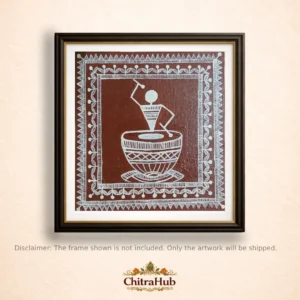
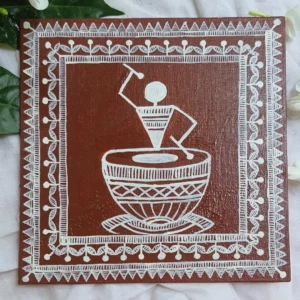
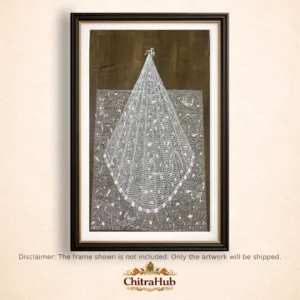
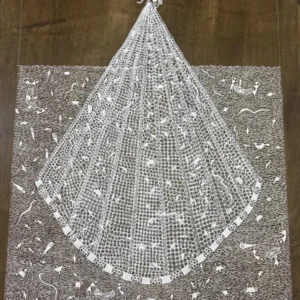
Traditionally painted on mud walls using white pigment made from rice paste, Warli art reflects a deep connection between humans and nature. What makes Warli unique is its minimalistic style — simple geometric shapes create powerful storytelling.
Warli art is not about decorative complexity; it is about expressing life through symbols.
Historical & Cultural Roots
Warli paintings were traditionally created during important occasions such as:
Weddings
Harvest festivals
Community celebrations
Religious rituals
Unlike other Indian art forms that depict mythological gods in detail, traditional Warli art focuses more on daily village life, farming, hunting, dancing, and community rituals.
The paintings were often made by women inside homes, serving both ritualistic and decorative purposes.
Distinctive Features of Warli Art
Warli paintings are easily recognizable due to their unique visual language:
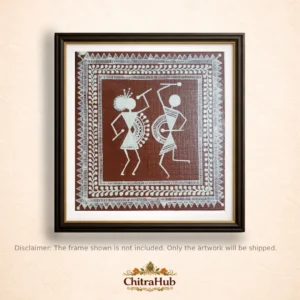
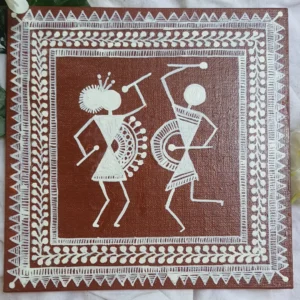
Geometric Human Figures
Human figures are created using:
These simple shapes form dynamic scenes full of movement.
Monochrome Palette
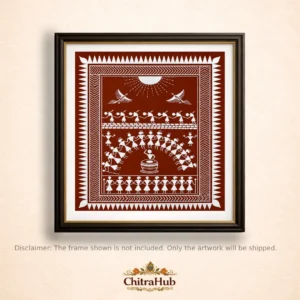
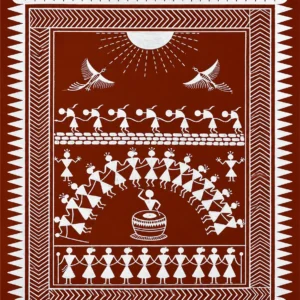
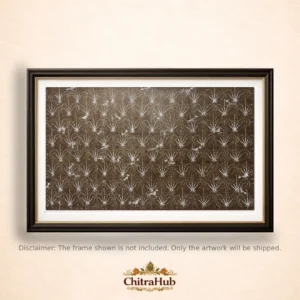
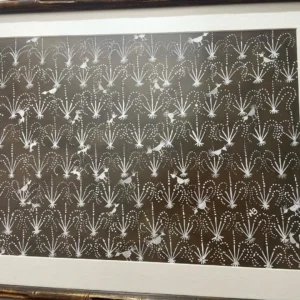
Traditional Warli art uses white pigment on an earthy brown or red background.
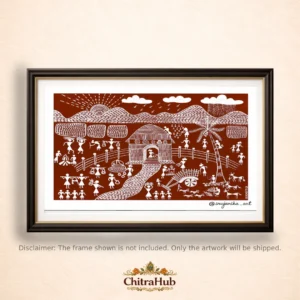
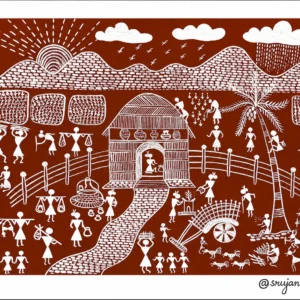
Everyday Life as Theme
Scenes commonly include:
No Perspective or Realism
Warli art is symbolic, not realistic. It emphasizes rhythm and repetition rather than depth or shadow.
Symbolism in Warli Art
Warli art is deeply symbolic and represents harmony with nature.
Common elements include:
Tarpa Dance Circle – Community unity and celebration
Trees and Animals – Dependence on forest life
Spirals and Patterns – Cycles of life
Mother Goddess (Palaghata) – Fertility and protection
Each painting tells a story rooted in tribal philosophy.
Evolution of Warli Art
While originally painted on walls using natural materials, Warli art has evolved into:
Canvas paintings
Paper artworks
Wooden panels
Modern home décor
Today, Warli is appreciated in urban homes, offices, and art galleries worldwide for its minimal yet meaningful aesthetic.
Despite modernization, authentic Warli artists continue to preserve traditional techniques and storytelling styles.
Why Buy Warli Art?
Warli paintings are:
Culturally authentic tribal art
Minimalistic yet expressive
Perfect for modern interiors
Symbolic of nature and harmony
A meaningful gift option
Owning a Warli artwork means supporting indigenous tribal artists and preserving a centuries-old art tradition.
Warli Art in Modern Spaces
Warli art blends beautifully with:
Its earthy aesthetic and storytelling simplicity make it versatile and timeless.
Supporting Tribal Artists
ChitraHub is committed to supporting authentic Warli artists by providing them with a trusted digital platform. Every artwork listed under this category is manually reviewed to ensure originality and quality.
By purchasing from this collection, you directly contribute to the livelihood of tribal artists and the preservation of indigenous culture.
Explore Warli Collection
Browse our curated collection of original Warli paintings below.
Each piece represents the rhythm of rural life and tribal storytelling.